Electric vehicle owners frequently face decisions regarding the most suitable infrastructure for residential charging. A common question arises during this process: home ev charger ac or dc? Understanding the core technical variations between alternating current and direct current is essential for making an informed choice. While public highway stations utilize rapid direct current to minimize waiting times, residential properties rely almost exclusively on alternating current due to standard grid limitations. Delivering power through a domestic grid requires a system that harmonizes with local electrical panels while maintaining long-term efficiency and safety for daily use.
Technical Differences and Grid Compatibility
The primary distinction between these two methods centers on where the power conversion occurs. Vehicles require direct current to fill their batteries, but utility grids distribute alternating current. A standard ev ac charger serves as a secure gateway, sending raw grid electricity directly to the vehicle’s internal converter. This method prevents overheating and preserves domestic grid stability. Implementing a dedicated ac ev charging station at residential properties ensures that the power flow remains constant without requiring expensive upgrades to the local transformer infrastructure. Therefore, alternating current represents the practical answer for domestic setups, balancing installation costs with reliable overnight power delivery.
Integrating Advanced Industrial Expertise into Homes
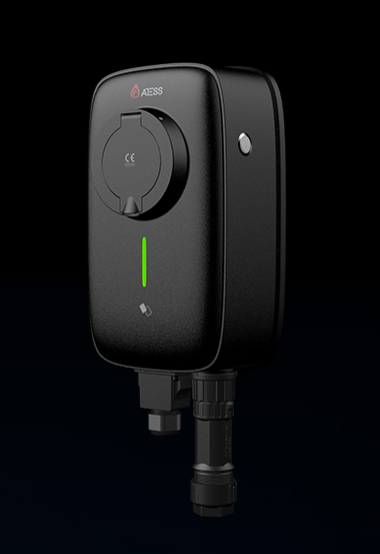
When distributors evaluate options for residential markets, system reliability under varying grid conditions becomes a decisive factor. Global providers like Atess address these demands by applying their extensive grid-management expertise to compact residential units. Known globally for industrial systems featuring seamless grid transitions and multi-continent certifications, they integrate similar durability into domestic solutions. Their specialized series, including the Nano EVA-07/11/22s-S model, demonstrates how industrial-grade safety can fit into a compact residential chassis. This specific model provides flexible power outputs to accommodate different vehicle requirements while protecting the household system from sudden voltage fluctuations.
Conclusion
Resolving the query of whether a home ev charger ac or dc option is most suitable depends on analyzing grid restrictions and user habits. Alternating current remains the logical choice for overnight residential use, combining cost-effectiveness with grid safety. By sourcing from experienced manufacturers like Atess, distributors can provide hardware that has proven its stability globally over five years of active deployment. Selecting an ev ac charger that matches household capacity allows homeowners to maximize energy utilization while securing a dependable, certified solution for their daily transportation needs. Choosing a robust ac ev charging station ultimately establishes a sustainable charging infrastructure for modern smart homes.
